


Essential Eligibility Criteria
These criteria, if not met, will disqualify a person from participating in a river trip with Talkeetna River Guides. The criteria exist for your safety and that of all trip participants. None of the criteria are meant to discriminate on the basis of any physical or mental disability, and they are applied uniformly to all potential trip participants, irrespective of the presence or absence of any disability. Talkeetna River Guides is committed to making reasonable modifications to any trip for individuals with a disability, as long as these modifications do not fundamentally alter the nature of the trip.
Our Criteria
The following criteria apply for river trip participants. In addition to meeting the essential eligibility criteria above, each participant must:
- Be able to brace in a seated position in a boat while holding on with at least one hand.
- Wear a Type V Coast Guard-approved personal flotation device (maximum chest size of 56 inches).
- Be able to independently board and disembark a boat multiple times each day. This may require stepping into the boat and maneuvering your body over and across tubes and fixed objects into a seated position.
- Be able to independently navigate shoreline terrain, including maneuvering around and across boulders, rocks, slippery and uneven surfaces, low branches, and vegetation. This includes the ability to maintain balance near precipitous ledges or cliffs.
- Be able to independently swim in whitewater or swift currents while wearing a PFD. This includes being an active participant in your own rescue, with the ability to:
(a) keep your airway passages sealed while underwater and regain control of your breathing when subjected to repeated submersion under waves or currents;
(b) orient yourself to new “in-river” surroundings;
(c) reposition yourself in the water to different swimming positions;
(d) swim aggressively to a boat or to shore in whitewater;
(e) receive a rescue rope, paddle, or human assistance, and possibly let go of the same;
(f) get out from under an overturned boat. - Be able to assist another passenger who has fallen out of the boat by pulling them back in.
River trips, particularly those involving glacial swift water, are inherently risky. You must be confident in your abilities and your capacity to stay calm if you become an involuntary swimmer. Cold water can trigger a gasping response in your respiratory system, which can be managed by focusing on your breathing and calming yourself. Cold water will also more quickly sap your energy and decrease muscle function compared to warmer water. While our guides are trained professionals, a successful rescue can be significantly hindered by a swimmer who is unprepared for conditions, fails to actively participate in their own rescue, or cannot follow directions while under stress.
Any Questions?
Speak to one of our friendly staff members who will be happy to help answer any questions you may have!
talkeetnariverguides@gmail.com
toll free: (800) 353-2677
phone: (907) 733-2677
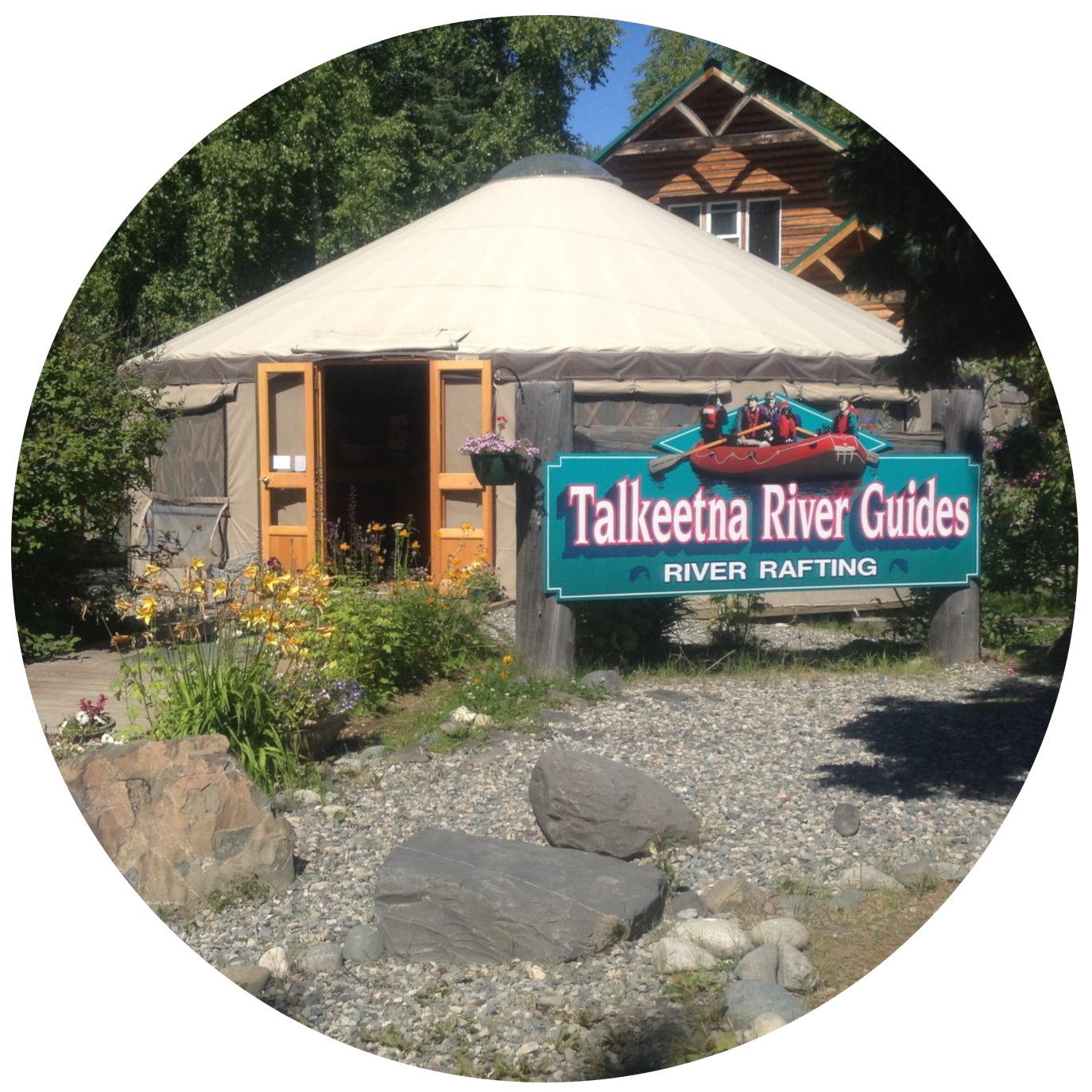
Talkeetna River Guides
13529 E. Main Street
P.O. Box 563
Talkeetna, Alaska 99676
USA

